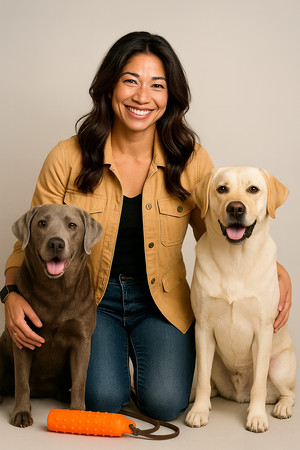
What Are The Best Journals for Pet Loss Grief? Finding Your Healing Companion
When I sat down to write after losing Charlie, I discovered something surprising: most grief journals weren't designed for the reality of pet loss. They either treated it like a minor disappointment or assumed grief followed a neat, linear path from denial to acceptance. Neither reflected what I was actually experiencing.
As someone with a background in psychology and nearly 30 years working with families through trauma and loss, I knew better. Grief doesn't move in straight lines. Pet loss grief, in particular, carries its own unique challenges—disenfranchised grief, decision fatigue around end-of-life care, and the physical void left when your daily routine suddenly has a dog-shaped hole in it.
If you're looking for a grief journal to help you process the loss of your dog, you need one that understands these realities. Let me walk you through what to look for, review different approaches, and help you find the right companion for your healing journey.
Why Journaling Helps With Pet Loss Grief
Before we talk about specific journals, let's address why journaling matters in grief recovery. This isn't just about "writing your feelings down"—there's actual psychological research supporting this practice.
Narrative Processing: When you write about traumatic or emotionally overwhelming experiences, you're helping your brain organize and make sense of what happened. Grief can feel chaotic and fragmented. Writing creates coherence.
Externalization: Getting thoughts and feelings onto paper literally moves them outside of you. This doesn't make them disappear, but it can create psychological space and relief from the constant internal churning.
Tracking the Non-Linear Path: One of the most validating aspects of journaling is being able to look back and see your own patterns. You realize you're not "failing" at grief—you're spiraling through it, which is exactly how it works.
Continuing Bonds: Modern grief therapy recognizes that healing doesn't mean severing the connection with who or what you lost. Journaling lets you maintain that bond while also moving forward with your life.
What to Look for in a Pet Loss Grief Journal
Not all grief journals are created equal. Here's what actually matters when you're choosing one:
Evidence-Based Structure
Look for journals that reference actual grief models—Worden's Tasks of Mourning, Kübler-Ross's stages (but understood as non-linear), or Continuing Bonds theory. Be wary of journals that promise to "move you through" grief in a set timeframe. Grief doesn't work on schedules.
Pet-Specific Content
Generic grief journals don't address the unique aspects of losing a pet: decision-making around euthanasia, anticipatory grief while your dog is still alive, the physical absence in your daily routine, or the social dismissal many people face ("it was just a dog"). Your journal should acknowledge these realities.
Non-Prescriptive Prompts
The best journals offer prompts as invitations, not commands. If a prompt doesn't resonate, you should feel free to skip it or adapt it. Rigid journal structures can add stress when you're already overwhelmed.
Space for Non-Linear Processing
Your journal should allow you to jump around, revisit earlier themes, and circle back to emotions you thought you'd "finished with." Grief isn't linear. Your journal shouldn't be either.
Types of Grief Journals: Different Approaches
Let me walk you through the main categories of pet loss journals available, so you can understand which approach might work best for you.
Guided Journals with Structured Prompts
These journals provide specific questions or writing prompts to help you explore different aspects of your grief. They're helpful if you find blank pages intimidating or if you're not sure where to start.
Best for: People who want direction and structure, those new to journaling, or anyone who feels overwhelmed by open-ended writing.
Watch out for: Journals that are too rigid or prescriptive. You want guidance, not rules.
Many guided journals for pet loss are available on Amazon with varying approaches. Look for ones with good reviews that specifically mention feeling "understood" or "validated" rather than just "helpful."
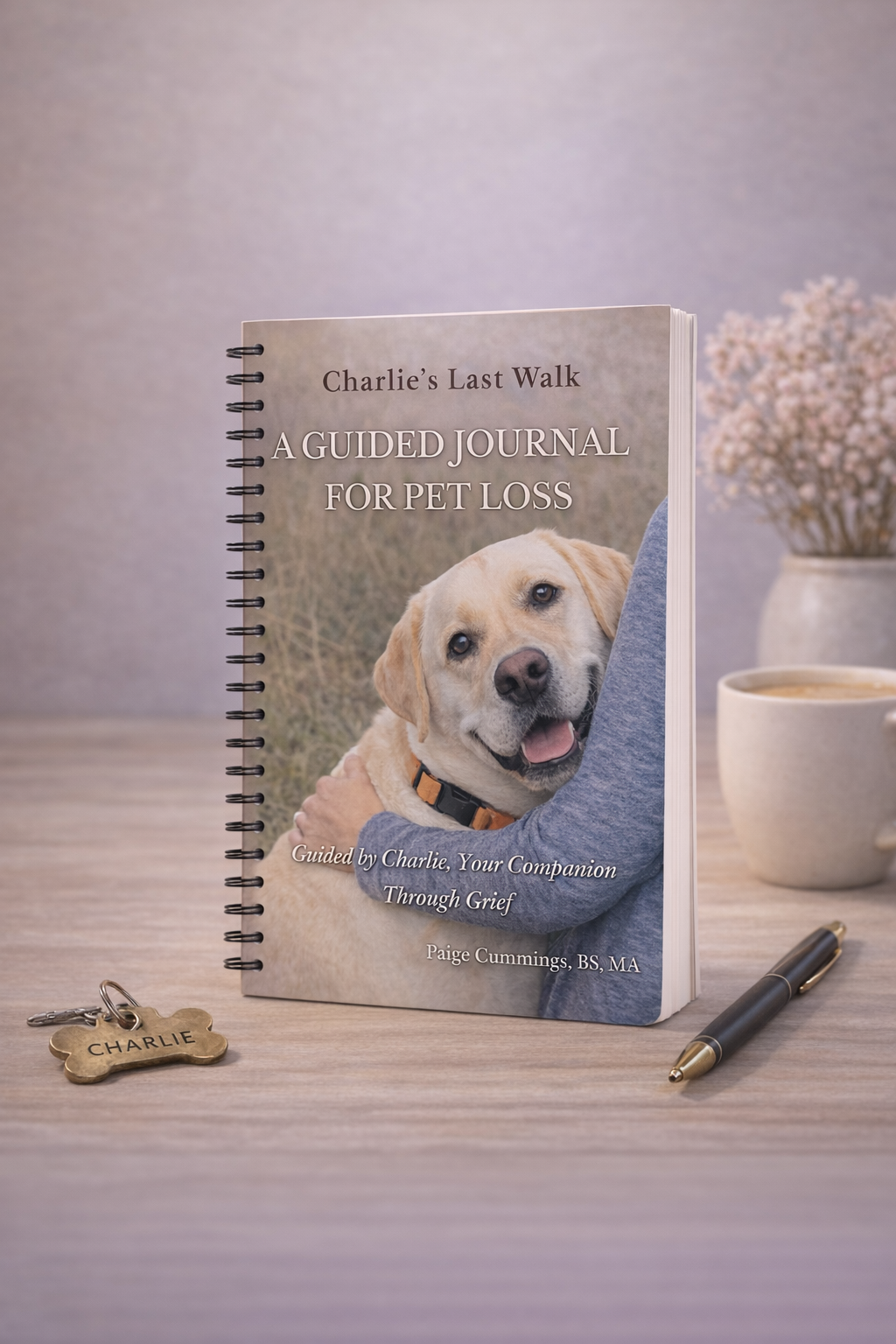
Available in paperback, hardback and in digital downloads.
Memory and Remembrance Journals
These focus primarily on recording memories, stories, and details about your dog's life. They're less about processing grief emotions and more about celebration and preservation — capturing the funny moments, the daily routines, the things only you knew about your dog.
Best for: People who want to honor their dog's legacy, those who find comfort in remembering happy times, or anyone creating a keepsake for family members to cherish for years to come.
This Vetbuosa "Letters to My Dog in Heaven" Leather Journal is a beautiful choice for this kind of remembrance. The warm tan leather cover is embossed with a heart, paw print, and the words "Always & Forever" — and inside you'll find 140 pages of refillable acid-free paper with both lined sections for writing and open sections for drawing or tucking in photos. It even includes a small storage pocket for keepsakes like cards or pictures. At just $13.99, it also makes a deeply thoughtful sympathy gift for someone else who has lost a dog.
Watch out for: If you're in acute grief, purely celebratory journals might not give you enough space to process the harder emotions. This journal works beautifully as a companion to other grief work, not necessarily a replacement for it.
Combination Journals: Memory Plus Processing
Some journals blend both approaches—space for memories alongside prompts for emotional processing. This can be powerful because you're honoring both the joy your dog brought and the grief their loss has left.
Best for: Most people, honestly. The combination approach mirrors the reality that grief and love coexist.
Therapeutic Workbooks
These are more intensive, often based on specific therapeutic models like CBT or narrative therapy. They include exercises, worksheets, and structured activities beyond just journaling prompts.
Best for: People who want a deeper dive, those comfortable with psychological frameworks, or anyone who has found therapy helpful in the past.
Watch out for: These can feel clinical if that's not your preference. Make sure the tone resonates with you before committing.

A great gift for yourself or for a friend who is struggling when the end is near or is already gone. Therapeutic journals can help bring the path of healing to light.
What Makes Charlie's Last Walk Different
I created Charlie's Last Walk: A Guided Journal for Pet Loss specifically because I couldn't find what I needed when I lost Charlie. Here's what makes it different:
Non-Linear by Design: The journal follows the emotional arc of Charlie's story, which means you'll encounter acceptance before denial, hope mixed with devastation, and guilt revisited multiple times. This mirrors how grief actually works, not how we wish it worked.
Grounded in Evidence: Every prompt is informed by established grief theory—Worden's Tasks, Continuing Bonds, and understanding of complicated grief. But I translated the academic framework into compassionate, accessible language.
Anticipatory Grief Included: There's an entire section dedicated to the time before loss, when you're watching your dog decline and making impossible decisions. Most journals skip this entirely.
Excerpt-Based Prompts: Each prompt is preceded by an excerpt from my memoir about losing Charlie. You're not journaling in isolation—you're walking alongside someone who has been exactly where you are.
Permission to Spiral: The journal explicitly gives you permission to skip prompts, return to earlier sections, and move through it in whatever order serves your healing. There's no "wrong way" to use it.
The journal is available on Amazon in paperback, with a digital interactive PDF coming soon.

Every bond is unique,
Everyone differs in their grief. That’s why K9 Hearts created multiple formats (physical and digital) to help you and your grief.
Supporting Your Journal Practice: Additional Tools
Journaling itself is powerful, but a few simple additions can enhance the practice:
Quality Pens That Feel Good to Write With
This might sound minor, but the physical act of writing matters. Using a pen that glides smoothly across the page can make journaling feel less like a chore and more like a ritual. These FIOVER Gel Pens, 6-Pack are a wonderful choice — quick-dry black ink with a fine 0.7mm point and soft grip, so your hand doesn't fatigue during longer writing sessions. At just $7.19 for six pens, they're Amazon's Choice with over 15,000 reviews. The soft Morandi colors even make them lovely to look at on your journaling space.
A Reading Stand or Pillow
If you're working through a guided journal, having a stand to hold it open can reduce physical strain. Grief is exhausting enough — your body doesn't need extra stress from hunching over a closed book. This Lamicall Tablet Pillow Standworks beautifully for journals and books too, with 6 adjustable viewing angles so you can find the most comfortable position whether you're sitting in a chair or lying in bed. At $19.99, it's a small investment in making your journaling practice gentler on your body.
A Meaningful Bookmark
A Meaningful Bookmark Something small, but choosing a bookmark that feels significant can make returning to your journal feel like coming back to a sacred space. This Dog Bookmark by Kaluofan is a beautiful choice — a stainless steel bookmark engraved with the words "Time Spent with Books and Dogs is Never Wasted," with a delicate heart and paw print charm dangling from the end. At just $9.99, it's a gentle daily reminder of the love you shared, and it arrives in a gift box, making it a thoughtful sympathy gift as well.
A Cozy Comfort Blanket
Grief doesn't only happen at your desk. Sometimes the heaviest moments find you on the couch, in bed, or curled up in your dog's favorite spot. Having something soft and meaningful wrapped around you during those times can bring real comfort. This Pawprints Left by You Pet Memorial Blanket is a 60" x 50" plush fleece throw printed with the heartfelt sentiment "Pawprints Left by You" — a beautiful acknowledgment that your dog's love will always be with you. It's machine washable, comes ready to gift, and at $34.99 it's something you'll reach for again and again — whether you're journaling, reading, or simply sitting with your grief.
A Dedicated Space
Consider creating a small journaling corner in your home. This doesn't have to be elaborate—a comfortable chair, good lighting, maybe a candle. Having a consistent place to write can signal to your brain that this is protected time for processing.
When to Journal and When to Rest
Here's something important: you don't have to journal every day. Some grief educators will tell you consistency matters, and that's true to an extent. But forced journaling when you're not ready can create resistance.
Listen to your body and emotions. Some days you'll need to write. Other days you'll need to sleep, walk, stare out the window, or just be. All of those are valid parts of grief.
The journal will be there when you're ready. Grief doesn't have a deadline.
Beyond Journaling: Additional Support
Journaling is one tool in grief recovery, but it's not the only one. If you're finding that writing alone isn't enough, consider:
Memorial art that brings beauty into your daily environment while honoring your dog's memory. At K9 Hearts, we create custom Legacy Art that celebrates the joy your dog brought to your life.
Support groups specifically for pet loss, where you can connect with others who understand the magnitude of this grief.
Professional counseling, particularly with therapists who specialize in grief and loss. There's no shame in needing additional support.
A Final Word on Finding Your Journal
The "best" journal is the one you'll actually use. Trust your instincts. If you flip through a journal and it resonates, that matters more than any expert recommendation.
Your grief is unique. Your healing path will be too. The journal that serves you might not be the one that serves someone else, and that's exactly as it should be.
Charlie taught me that healing isn't about "getting over" grief—it's about learning to carry it with grace. The right journal can be a companion on that journey, holding space for both your sorrow and your love.
About K9 Hearts Memorial Services
Based in Port Orchard, Washington, K9 Hearts offers compassionate grief support and healing legacy art specifically designed for those navigating the loss of a beloved dog. Founded by Paige, who holds a B.S. in Psychology and M.A. in Forensic Psychology with nearly 30 years of experience in the mental health field. K9 Hearts combines professional expertise with deep personal understanding of pet loss grief.
Learn more at www.k9hearts.com